A clear B2B guide to maltogenic amylase: how it modifies starch, protects bread softness, and supports bakery shelf-life, texture, and formulation goals.
Maltogenic Amylase is a starch-modifying enzyme used across commercial bakery and food processing to help bread, buns, rolls, tortillas, sweet goods, and other starch-rich products stay softer for longer.
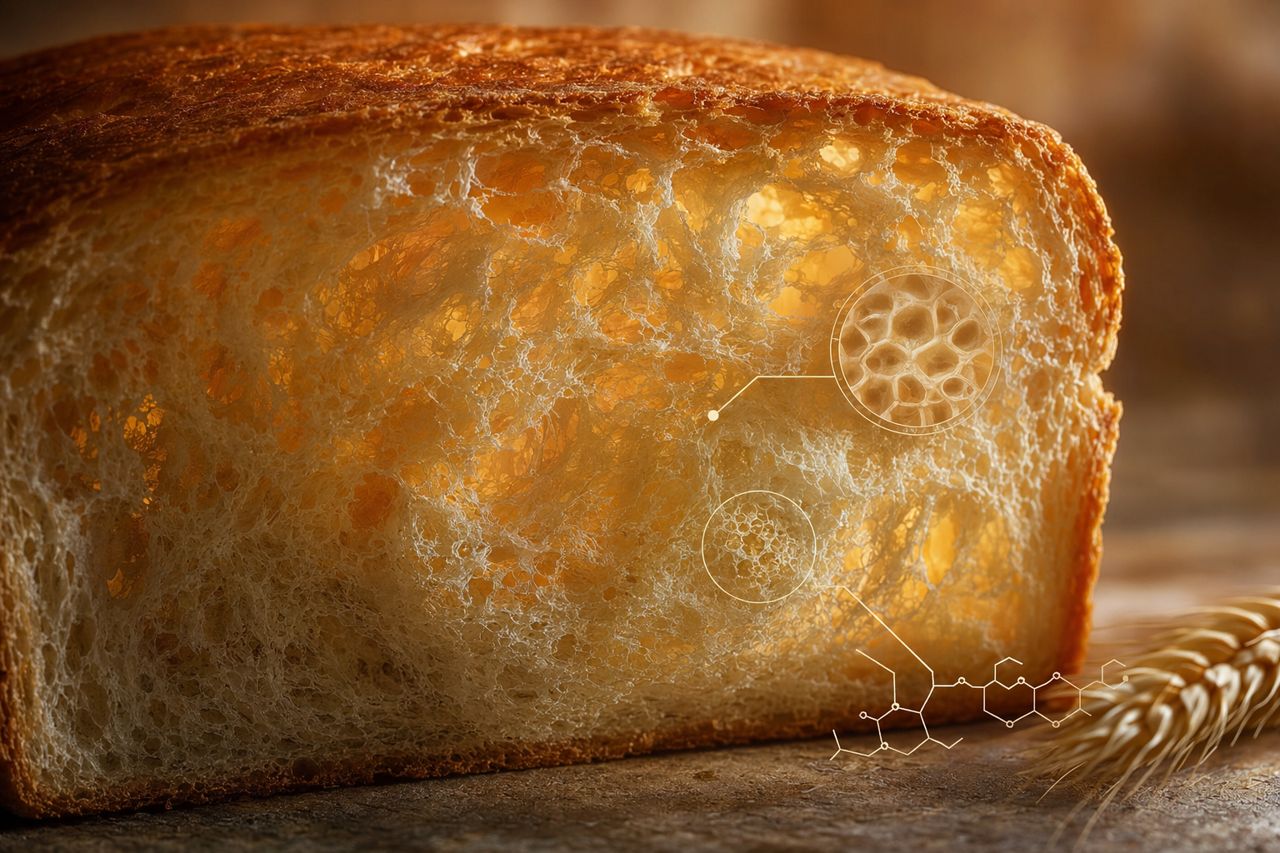
In plain terms, it works where staling begins: inside gelatinized starch. During baking, starch absorbs water and swells. After cooling, starch molecules naturally begin to reassociate, pushing the crumb toward firmness, dryness, and breakage. Maltogenic Amylase slows that change by trimming starch chains into smaller fragments that interfere with recrystallization.
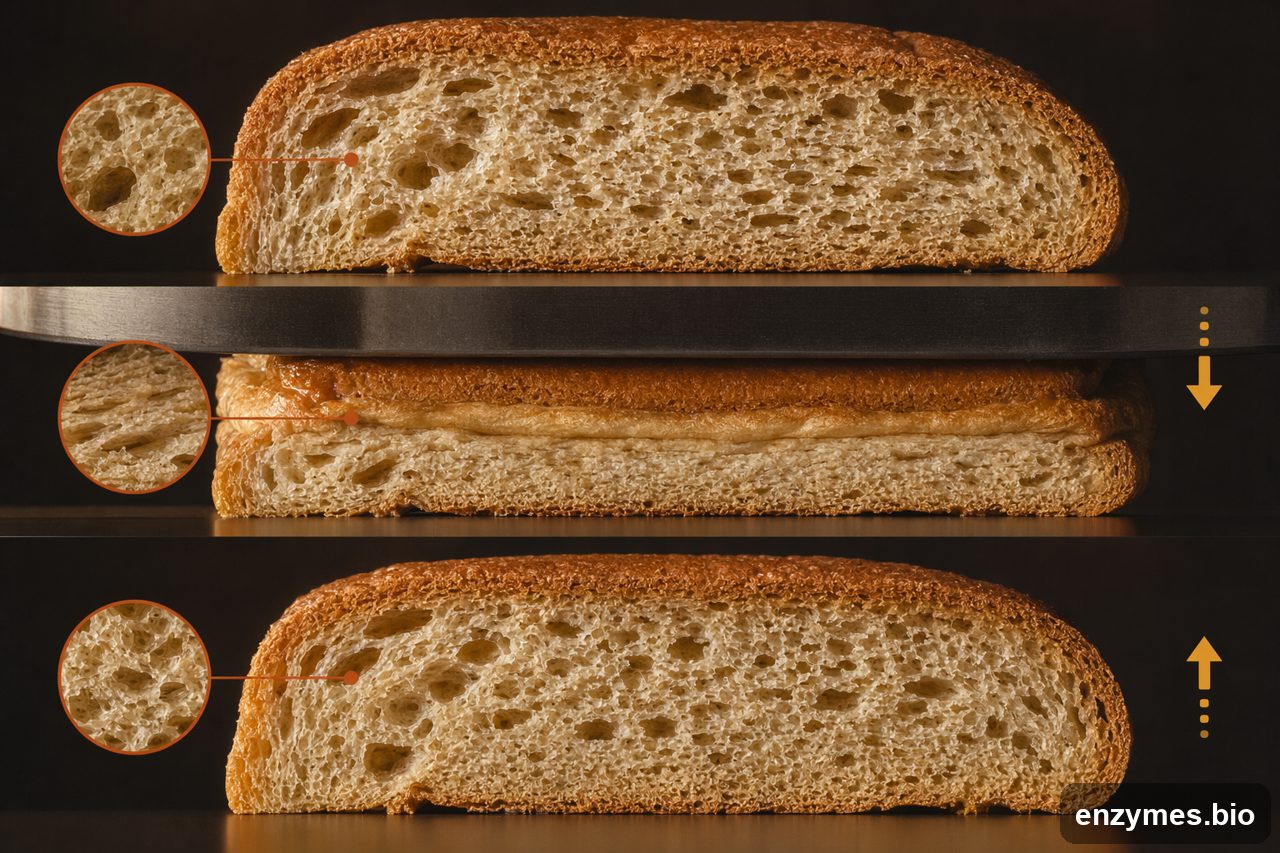
For bakery teams, the result is practical and sensory: a crumb that feels more tender, recovers better after compression, and holds a fresher bite through distribution and storage.
Maltogenic Amylase Solutions supplies maltogenic amylase wholesale to bakery manufacturers, improver and premix blenders, and ingredient distributors.
Buying in bulk? Send the product you make, the quantity and the destination country; pricing and pack are quoted per order. Request a quote
Maltogenic Amylase is valued because it targets shelf-life without turning the product into a generic soft texture. Used well, it can preserve the identity of the formula: the chew of a bun, the fold of a tortilla, the slice resilience of sandwich bread, or the moist eating quality of enriched dough.
Typical performance goals include:
Maltogenic Amylase acts mainly on cooked, gelatinized starch. Once starch has been opened by heat and moisture, the enzyme can access specific starch chains and convert portions of them into maltose-rich fragments and small carbohydrates.
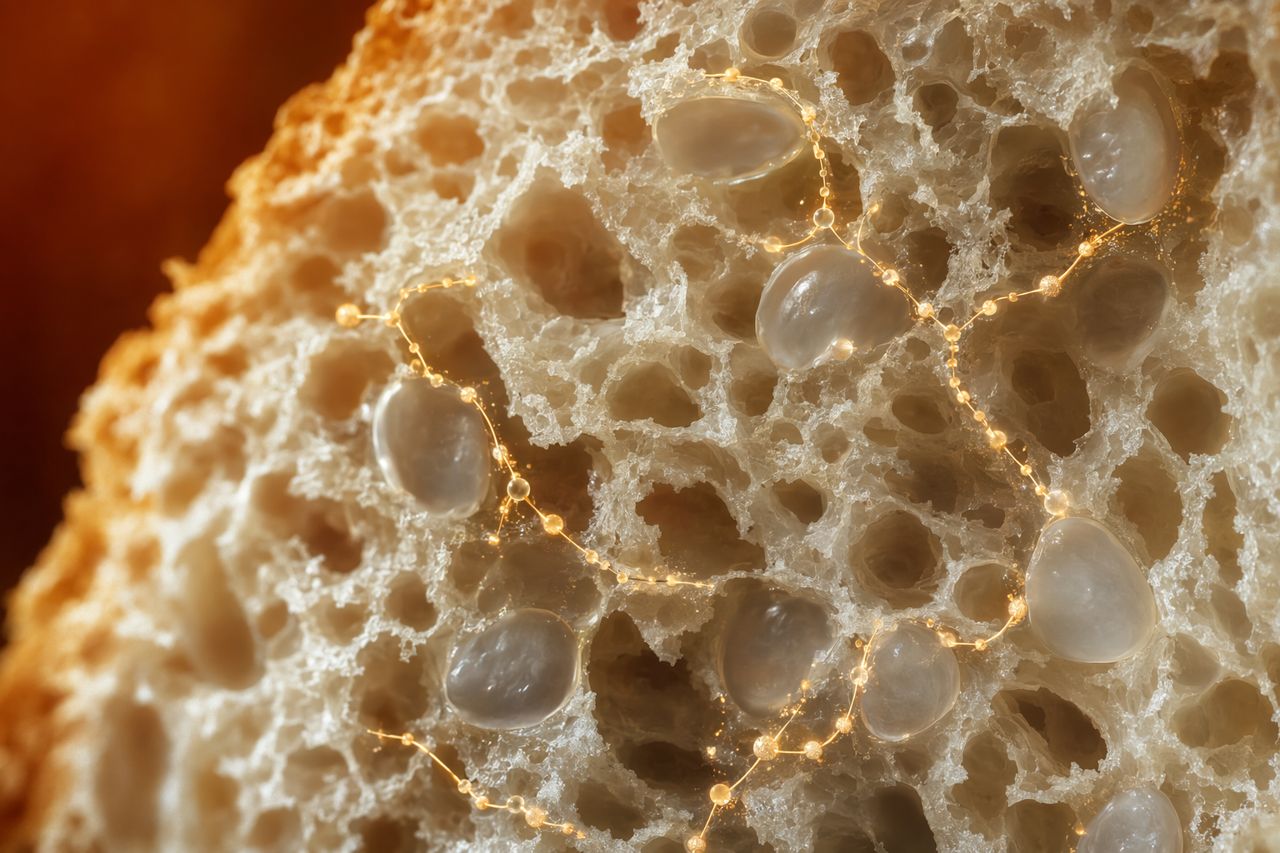
This matters because bread staling is strongly linked to starch retrogradation, especially the reassociation of amylopectin over time. By changing the structure of starch after gelatinization, Maltogenic Amylase makes it harder for those molecules to pack back into firm crystalline regions.
The enzyme is not simply “adding sweetness” or “making sugar.” Its commercial value is textural. The useful change is the controlled reshaping of starch architecture so the crumb remains more flexible and less prone to firming.
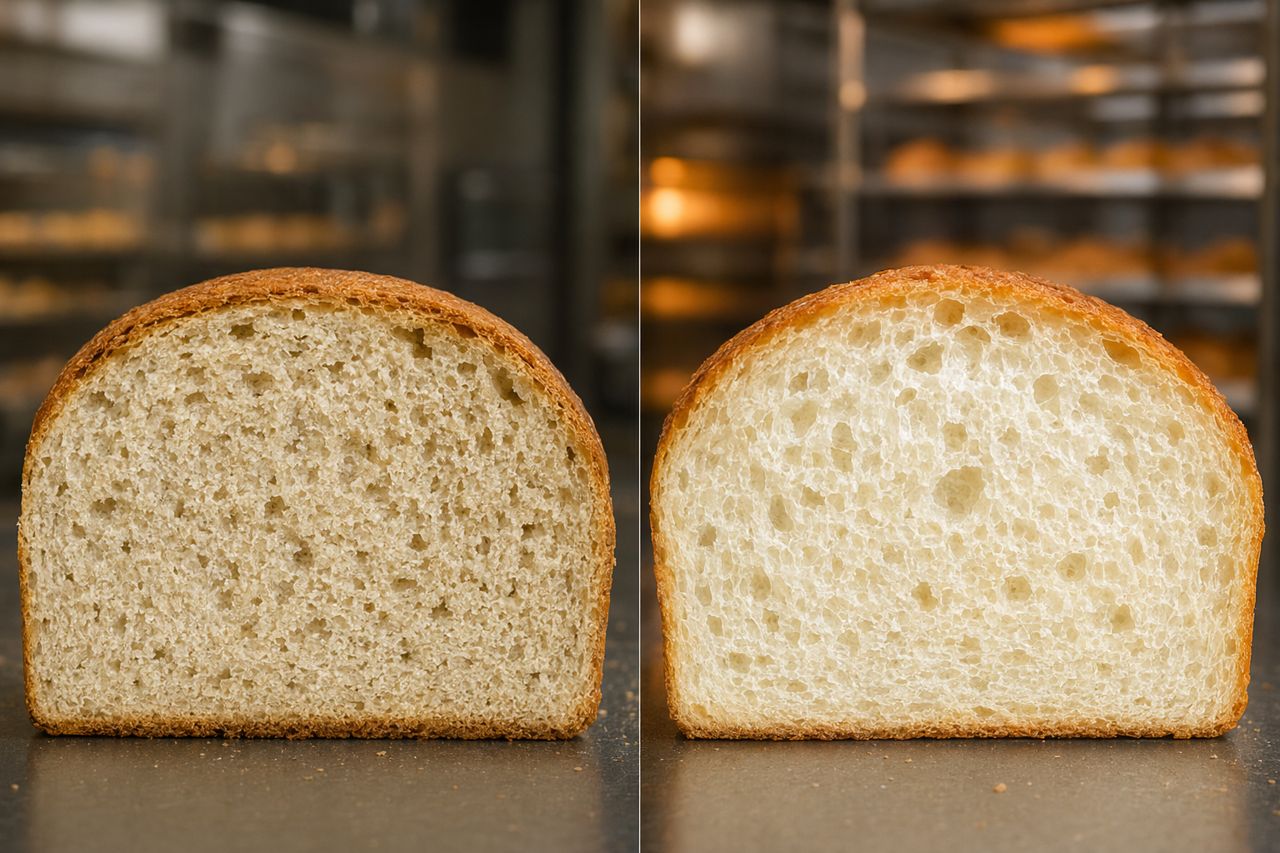
The central benefit is delayed firming. In pan bread, rolls, buns, and soft sandwich formats, Maltogenic Amylase helps maintain a tender crumb without making the product feel wet, gummy, or underbaked when properly balanced.
Freshness is not only softness. A good crumb compresses, then returns. Maltogenic Amylase can support that resilience, helping products survive slicing, bagging, stacking, transport, and handling.
For industrial bakeries, the critical moment is often not the first hour out of the oven. It is day two, day five, or the end of the declared freshness window. Maltogenic Amylase helps the product remain pleasant when the consumer actually eats it.
In frozen dough, fully baked frozen, or par-baked products, controlled starch modification can help protect texture through thermal stress. Formula balance, process conditions, and bake profile remain essential.
Maltogenic Amylase is especially relevant in products where crumb softness and shelf-life perception drive repeat purchase.
Common applications include:
Maltogenic Amylase is powerful because it is specific. That also means it should be formulated with intention.
Key variables to evaluate include:

The best development work compares texture over time, not just fresh-baked softness. Compression testing, sensory review, slice handling, foldability, and consumer-relevant storage conditions should all be part of evaluation.
Maltogenic Amylase is not a universal fix for every staling problem. It will not compensate for poor flour quality, underbaking, excessive moisture loss, weak packaging, or uncontrolled process variation.
It is also not the same as fungal alpha-amylase, bacterial alpha-amylase, or glucose-forming amylases. Each enzyme type cuts starch differently and produces different effects in dough handling, crumb structure, crust color, sweetness, and shelf-life.
For procurement and formulation teams, enzyme identity matters. A specification should clearly identify Maltogenic Amylase as the functional enzyme and align the grade, carrier, solubility, handling format, and regulatory status with the intended market.
Labeling treatment depends on jurisdiction, product category, enzyme source, processing conditions, and intended claim language. In many bakery systems, enzymes may be evaluated as processing aids, but this should never be assumed across all markets.
Before commercialization, confirm:
A good enzyme partner should support both performance and risk control. Procurement should look beyond price per kilogram and evaluate whether the material is consistent, bakery-relevant, and supported by usable documentation.
Request clarity on:
For first plant or pilot trials, keep the test clean. Change one variable at a time, bake to the same endpoint, and store samples under realistic commercial conditions.
A useful trial set often includes:
Watch for both benefits and overuse signals. Too much starch modification may push the crumb toward tackiness, gumminess, excessive softness, or weak slice structure. The target is not maximum softness; it is controlled freshness with the right bite.
Maltogenic Amylase earns its place in modern bakery because it works inside the crumb, where freshness is felt. It gives R&D teams a precise way to manage starch retrogradation and gives commercial bakeries a practical tool for protecting sensory quality through distribution.
Used with good flour control, disciplined baking, and appropriate packaging, it can turn shelf-life from a compromise into a designed feature.
Tell us what you make, how it is distributed, the quantity per order or per month, and the destination country. Use the inquiry form on this page. Pricing, pack format and lead time are quoted per order. Request a quote
Tell us your application and volume — we reply with pricing and lead time.
We have received your message. We will reply by email.