Understand how substrate, moisture, mixing, heating, proofing, and bake profile influence Maltogenic Amylase performance in industrial bread and sweet baked goods.
Maltogenic Amylase is valued in commercial baking because it helps bread stay softer for longer while supporting a resilient, pleasant crumb. But its performance is not defined by the ingredient label alone. It is shaped by the dough system, the heat curve, the way water is managed, and the point at which the enzyme is distributed through the matrix.
For bakery R&D, plant technical teams, and procurement groups, the practical question is simple: what conditions allow Maltogenic Amylase to deliver consistent softness and shelf-life extension without over-processing the crumb?

This guide outlines the main process factors to control during formulation, pilot trials, scale-up, and production troubleshooting.
It is written for bakery manufacturers, improver blenders and distributors buying maltogenic amylase in bulk.
Buying in bulk? Send the product you make, the quantity and the destination country; pricing and pack are quoted per order. Request a quote
Maltogenic Amylase works on starch-derived structures as dough heats and starch gelatinizes. That means its performance depends on the nature and accessibility of the starch in the formula.
A dosage that performs cleanly in a white pan bread may not transfer directly to high-fiber, high-sugar, or high-fat formulas. Treat each starch system as its own development environment.
Water controls dough development, starch gelatinization, enzyme mobility, and final crumb eating quality. Too little available water can restrict enzyme action. Too much free water can create handling issues or a gummy sensory profile.
When evaluating Maltogenic Amylase, track softness alongside baked moisture, crumb resilience, sliceability, and sensory chew. A loaf can read soft on compression and still feel wet, weak, or pasty if moisture is not balanced.
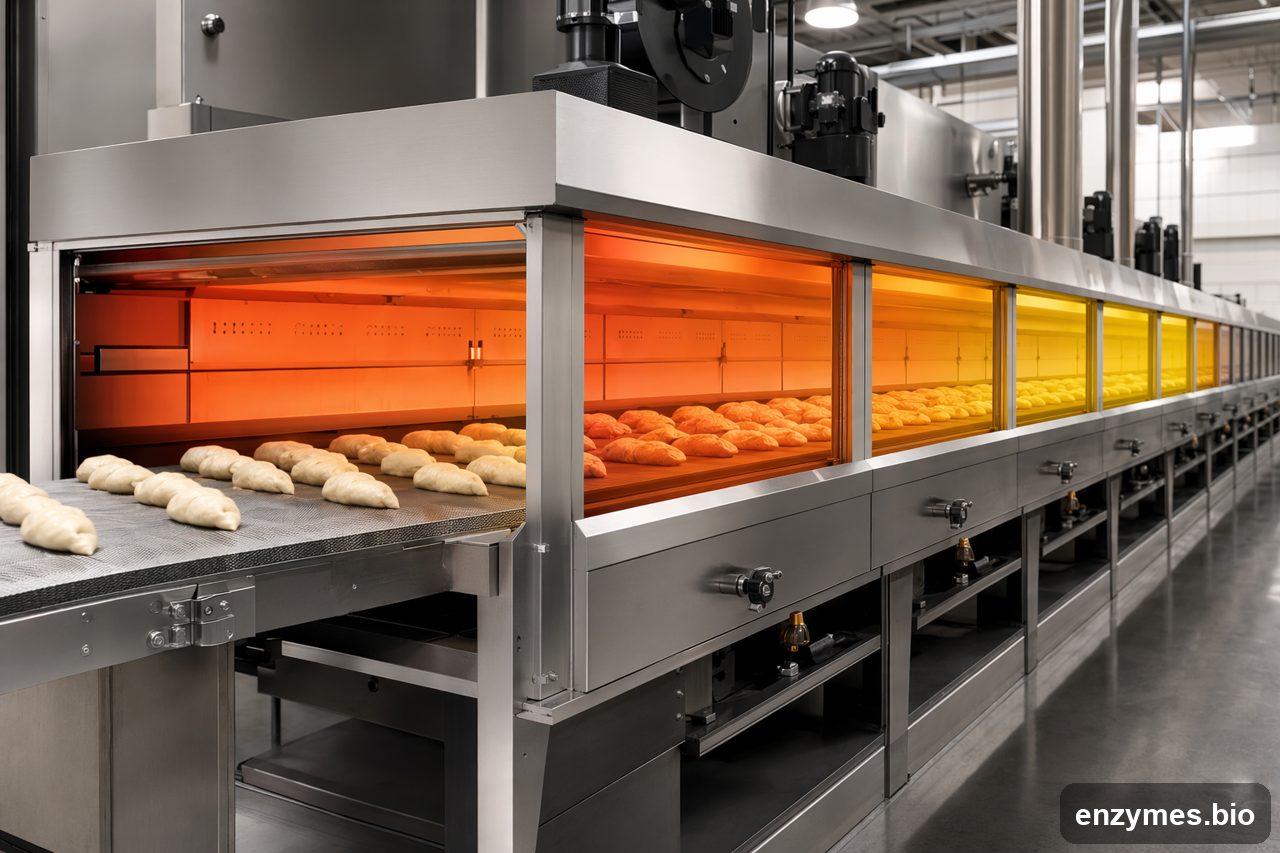
Maltogenic Amylase should be distributed evenly through the dry or liquid ingredient system according to the plant’s handling method. Uneven dispersion can create inconsistent crumb texture, patchy softness, or batch-to-batch variability.
If trial results look promising but production performance drifts, investigate dispersion before assuming the enzyme itself has changed.
Although Maltogenic Amylase is most consequential during the heating phase, pre-bake process conditions influence the matrix it enters. Fermentation, intermediate proof, final proof, and line delays all change pH, gas structure, dough extensibility, and water distribution.
A process with long, warm fermentation may require a different enzyme strategy than a fast no-time dough, even when the formula appears similar on paper.
The oven is where Maltogenic Amylase has its most important window of action. As the dough heats, starch begins to gelatinize and becomes more available. The enzyme works within this changing thermal environment until heat progressively reduces activity.
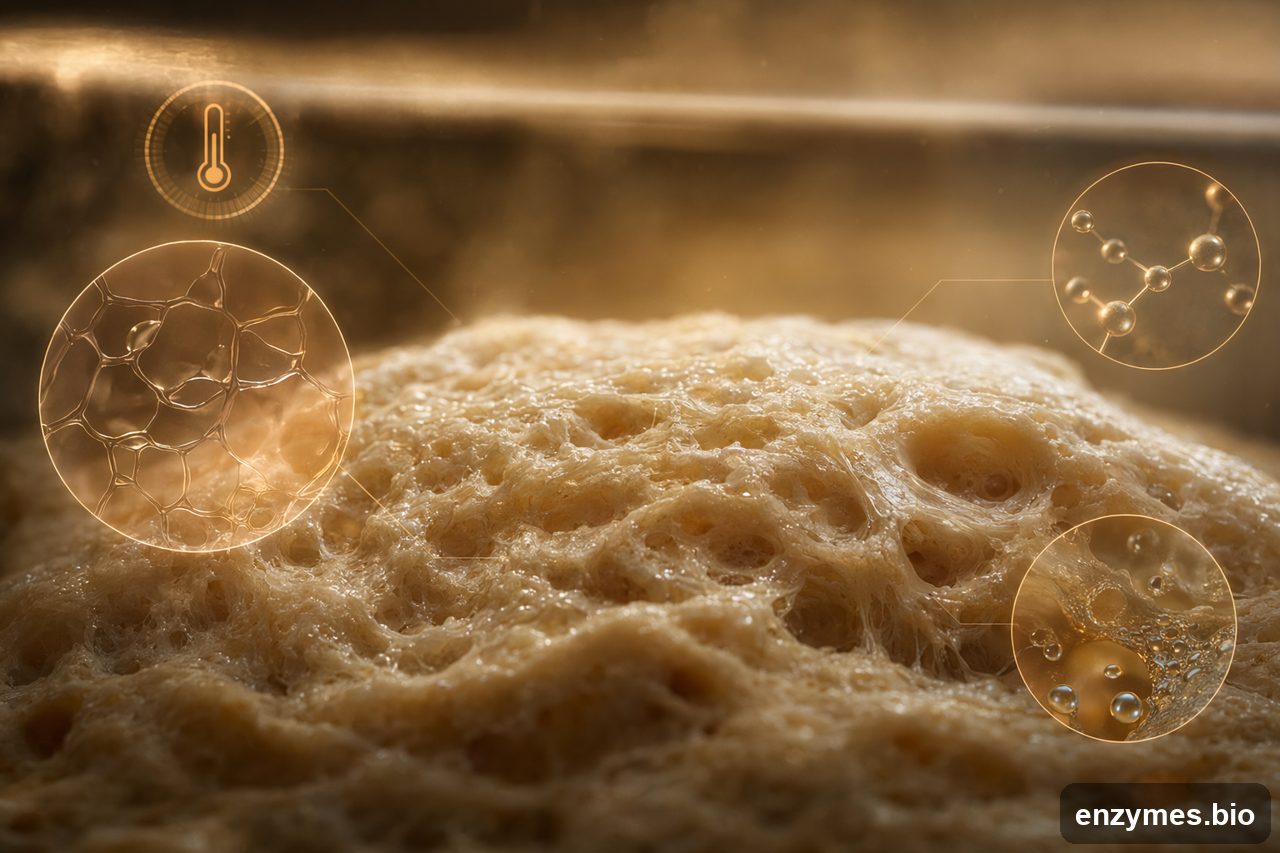
Do not evaluate enzyme performance separately from the bake profile. A formulation change and an oven adjustment can produce similar softness readings but very different shelf-life behavior.
Maltogenic Amylase is often used in systems that also include emulsifiers, oxidants, reducing agents, gluten, hydrocolloids, fungal alpha-amylase, xylanase, lipase, or other bakery enzymes. These ingredients can complement one another, but they can also change the interpretation of trial results.
Run structured trials. Change one major variable at a time where possible, and evaluate the full system rather than judging Maltogenic Amylase in isolation.
Maltogenic Amylase is used across many soft bakery formats, but the target texture is not identical in each application.
Define the texture target before trialing. “Softer” is not specific enough. The more useful question is: softer at what day, at what moisture level, with what resilience and eating quality?
Maltogenic Amylase can slow crumb firming, but finished product handling still determines the consumer experience. Packaging, cooling, slicing, and storage temperature can either reveal or obscure the enzyme’s benefit.
Evaluate softness over the product’s commercial shelf-life target, not only at day one. Include instrumental texture where available, but keep sensory review central: crumb should feel soft, spring back cleanly, and eat fresh rather than damp or fragile.
| Observation | Possible process factor | What to investigate |
|---|---|---|
| Soft at day one but firms quickly | Bake profile, packaging, insufficient enzyme effect in system | Check core bake, cooling, bagging time, formula transfer from pilot to plant |
| Crumb feels gummy or weak | Excess available water, underbake, over-softening system | Review hydration, final internal temperature, hydrocolloid/emulsifier balance |
| Inconsistent softness by batch | Dispersion, flour variation, mixing energy | Audit premix uniformity, mixer loading, flour certificate trends |
| Good lab trial, poor plant result | Scale-up heat transfer or mixing difference | Compare dough temperature, proof time, oven zone profile, product core heating |
| Loss of sliceability | Weak structure, moisture imbalance, improver interaction | Review gluten strength, oxidant system, cooling time, blade conditions |
| Dry eating quality despite softness data | Overbake, moisture migration, formula imbalance | Pair texture readings with sensory, moisture, and weight-loss data |
A strong Maltogenic Amylase trial should be designed around the finished product target and the plant reality.
For procurement teams, Maltogenic Amylase selection should consider more than price per kilogram. The enzyme’s real value appears in reduced staling, stronger shelf-life claims, fewer complaints related to dryness, and better consistency across production lots.
Ask suppliers for support on:
Tell us the product, a short outline of your process, the target shelf life, the quantity per order or per month, and the destination country. Use the inquiry form on this page. Pricing, pack format and lead time are quoted per order. Request a quote
Tell us your application and volume — we reply with pricing and lead time.
We have received your message. We will reply by email.